4 Interesting Facts About Lichens
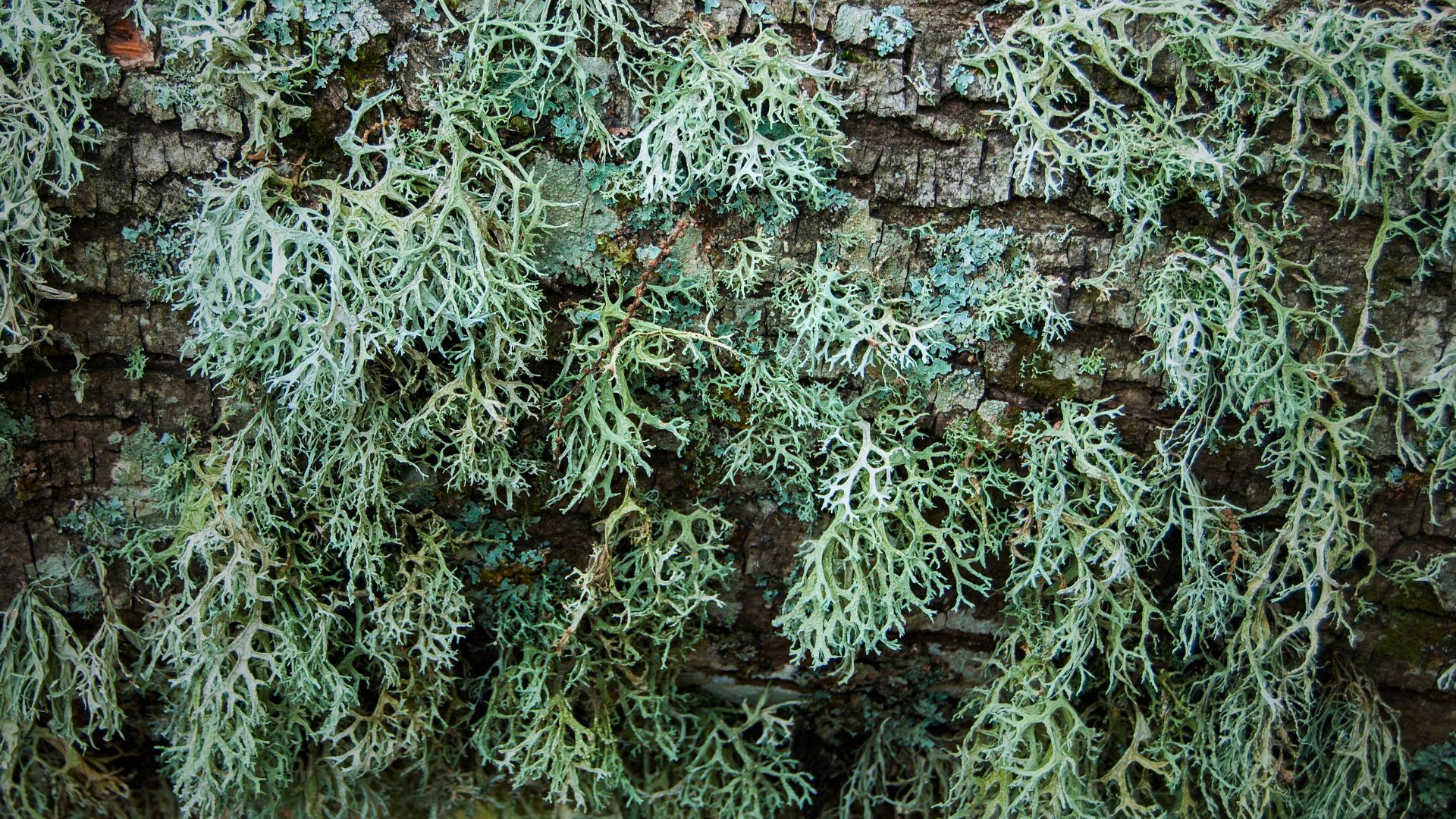
Lichens often go unnoticed in forests, especially in the warmer months, when our eyes are distracted by beautiful blooming flowers and green landscapes. To an untrained eye, lichens may look like boring plants growing on trees’ bark, boulders, or downed logs. However, they are anything but boring. In fact, some of the things we explore in this article are quite remarkable. Here are some interesting facts about lichens you probably didn’t know about.
1. Lichens Aren’t Single Organisms
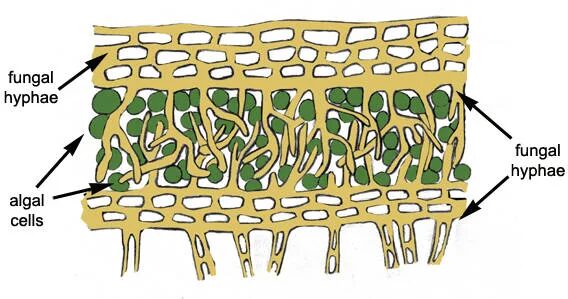
Until the advent of microscopy, lichens were thought to be single organisms. However, upon closer inspection, scientists discovered that they are actually tiny ecosystems, consisting of a symbiotic association of algae or cyanobacteria (photobiont), and fungi (mycobiont). The very term “symbiosis” was first used in reference to lichens, as they are such an excellent example of collaboration between species.
The photobiont produces food through photosynthesis, and most of it is supplied to the mycobiont. Only a little is spared for the growth and development of the photobiont. Meanwhile, the mycobiont anchors the lichen to its substrate and uses its hyphae to absorb trace minerals from the environment while also shielding its partner from the elements. By working together, these partners manage to survive even in harsh conditions.
Further research provided evidence that lichens also host bacterial communities and, in some cases, additional fungal species. They are truly a community of organisms!
Source: Biology Teach
2. Lichens Indicate Air Pollution
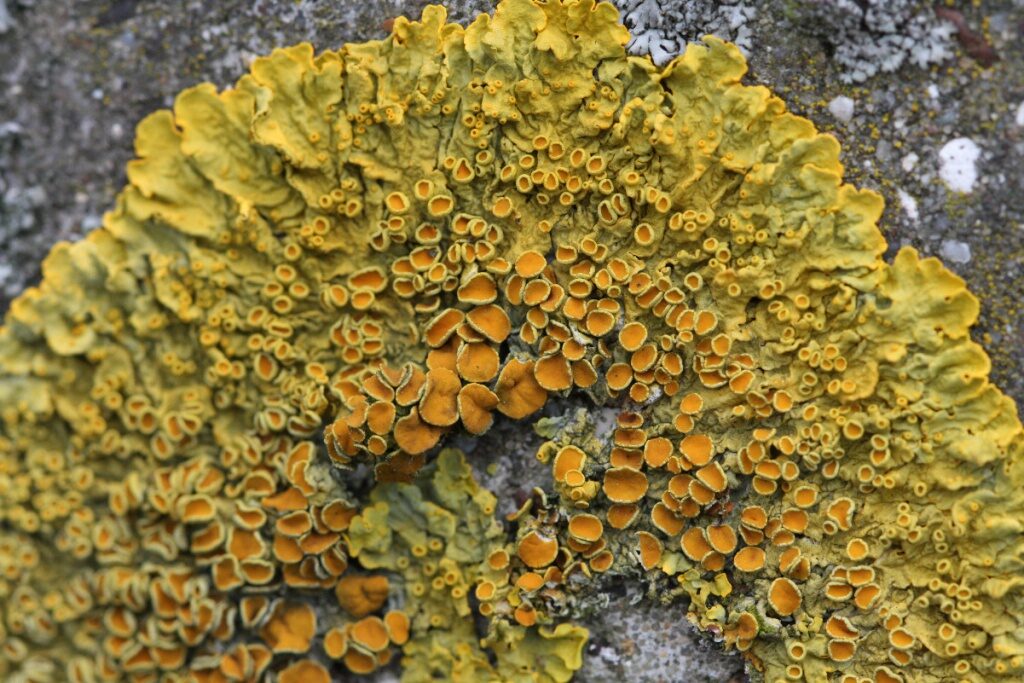
Lichens absorb nutrients and water from the surrounding air, which means that anything in the air is taken straight inside. So when pollutants like nitrogen oxides, sulfur dioxide, ammonia, or heavy metals are present, lichens pick them up and store them in their tissue. We can analyze which species are thriving or dying off to understand how polluted the air is. Some species, such as Xanthoria parietina, are very tolerant of pollution, while other species disappear rather quickly as air quality worsens, for example Lobaria pulmonaria. This makes them perfect for low-cost monitoring of environmental health.

Source: Plantlife
3. They Can Survive in Space
In 2005, the European Space Agency (ESA) tested two lichen species (Rhizocarpon geographicum and Xanthoria elegans) by exposing them directly to outer space on the Foton-M2 mission. For nearly 15 days, the lichens endured vacuum, intense temperature swings, and cosmic radiation. Conditions far harsher than on Earth, and that is an understatement.
When the samples were brought back and analyzed, scientists discovered something astonishing: the lichens survived completely intact and were still able to photosynthesize normally. Keep in mind, unlike bacteria, lichens are multicellular and function almost like a tiny ecosystem. Their ability to endure open space suggests that life can be incredibly resilient and also raises interesting astrobiological questions: could organisms travel between planets on meteorites? Could lichens survive on Mars?
4. Some Lichens Fix Nitrogen
Nitrogen makes up about 78% of the air we breathe. In its natural form, it’s completely harmless. Problems start when human activities convert nitrogen into reactive compounds, such as nitrogen oxides (NO3). Car engines, fertilizers, and livestock waste release these pollutants, which then contribute to smog, acidification, and respiratory issues.
As you already know, lichens respond strongly to these reactive nitrogen compounds. Some species are extremely sensitive, while others may actually thrive because the extra nitrogen acts almost like a fertilizer. In this case, cyanobacteria acts as a partner species (i.e., cyanolichens). Only about 10% of lichen are partnered with cyanobacteria, as nitrogen fixation is energetically costly due to chemical transformation taking place. Through nitrogen fixation, lichens are able to turn atmospheric nitrogen into biologically useful forms that enrich soils and support surrounding plants.
Source: NatureSpot
SOURCES
- Askham B. 2020. Nature and Pollution: What Lichens Tell Us About Toxic Air. Natural History Museum.
- Lichen. 2025. Encyclopaedia Britannica.
- Lichens and Nitrogen Cycling. 2025. Wikipedia.
- Lichen Survives in Space. 2005. European Space Agency.
- Lichens: Unassuming Beings That Will Blow Your Mind. 2025. Heritage Conservancy.
- Westwood B., Shersby M., Hoare B., Morss A. 2022. Lichens: What They Are and How To Identify the Different Types. Discover Wildlife.
- Zhao Y., Wang M., Xu B. 2021. A Comprehensive Review On Secondary Metabolites and Health-Promoting Effects of Edible Lichen. Journal of Functional Foods, Vol(80).